Best Plants for Your Terrarium
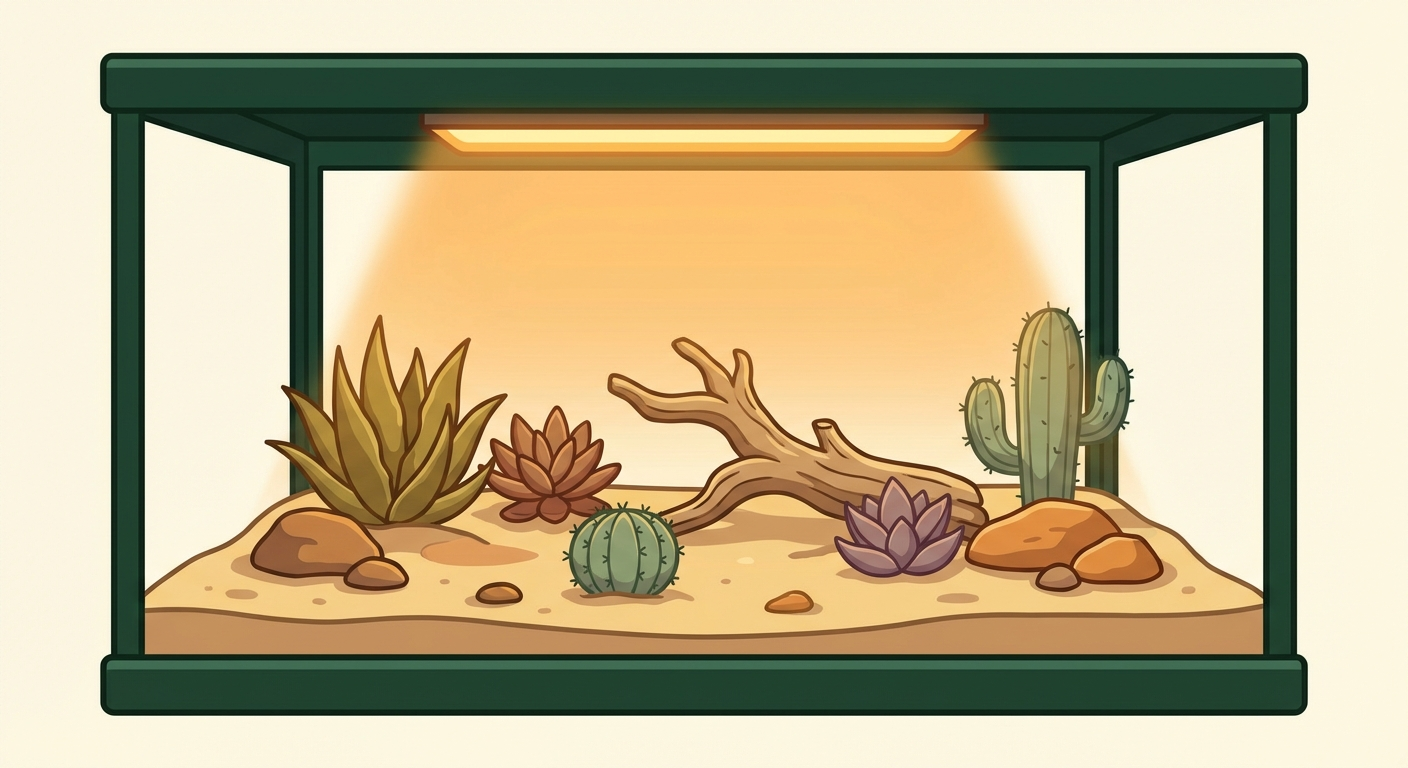
Arid environments require tough, drought-resistant lovers of light. These plants thrive in well-draining substrate and lower humidity, bringing a slice of the desert into your home.
🌱 The Terrarium Starter Pack
If you're new to dry enclosures, start with these. They're practically unkillable in the right conditions and forgive the occasional overwatering.
- Haworthia: The cute zebra plant that stays small and cute forever.
- Aloe vera (small): The medicinal classic that loves bright sun.
- Tillandsia (Air Plant): Zero soil needed, just some bright light and a mist.
- Sansevieria cylindrica: A spikey architectural accent that handles low light.
Where to Place Them
Foreground
Low-growing succulents and ground covers. These need the most light and shouldn't be shaded by taller plants.
Midground
Your structural elements. Small aloes and gasterias go here to create visual interest without touching the glass top.
Background/Mounted
Taller sansevierias or mounted air plants. These add height and draw the eye upward.
🟢 Beginner Plants
Perfect for your first build. These tolerate a wide range of conditions and recover quickly from mistakes.

Haworthia Haworthia fasciata
Often called the "Zebra Plant," this little succulent is the darling of the terrarium world. Its fleshy, dark green leaves are striped with white bumps, creating a striking texture. Unlike many succulents, Haworthia actually tolerates lower light conditions relatively well, though it prefers bright indirect light. They stay incredibly compact, making them ideal for small jars where you don't want plants touching the glass immediately.

Aloe Vera Aloe barbadensis miller
You likely know this plant for its skin-soothing gel, but it's also a terrarium staple. Use a small pup or offset for your enclosure. Aloe loves bright light and very well-draining soil. In a terrarium, the key is to be careful not to overwater it; let the soil dry out completely between drinks. Its spiky architecture adds a great contrast to softer-leaved plants.

Air Plants Tillandsia spp.
Tillandsia are epiphytes, meaning they don't need soil at all! In an arid terrarium, you can glue or wire them to driftwood or rocks. They absorb water through their leaves, so a quick mist 1-2 times a week is usually sufficient. They are perfect for adding greenery to the upper "dead space" of a terrarium where soil depth isn't available.

Cylindrical Snake Plant Sansevieria cylindrica
This is the more architectural, cylindrical cousin of the common Snake Plant. It grows in stiff, spear-like leaves that reach upward. It is nearly indestructible and can tolerate lower light levels than most succulents. Because it grows vertically rather than sprawling, it's excellent for adding height to the back corners of your terrarium without taking up too much floor space.

Echeveria Echeveria spp.
Famous for their beautiful rosette shapes, Echeverias come in shades of green, blue-green, and even dusty pink. They look like flowers blooming from the soil. They require plenty of light to maintain their compact shape; without enough sun, they will "etiolate" or stretch out toward the light. Keep them in the brightest spot of your terrarium.
🟡 Intermediate Plants
These beauties require a bit more attention to watering schedules or light requirements.

Jade Plant Crassula ovata
Jade plants are essentially small trees. With a thick, woody trunk and fleshy oval leaves, they bring a bonsai vibe to the terrarium. They are drought-tolerant but can get leggy if they don't get enough hours of direct sunlight. You may need to prune them occasionally to keep them contained within the glass walls.

Gasteria Gasteria spp.
Often called "Ox Tongue" due to their rough, tongue-shaped leaves, Gasterias are fascinating succulents. They are closely related to Aloe and Haworthia but are distinct in their shape. They are generally more shade-tolerant than many other succulents, making them a great candidate for slightly deeper terrariums where light might be slightly filtered.

Lithops Lithops spp.
Known as "Living Stones," these tiny succulents have evolved to look like pebbles to avoid being eaten. They are incredibly fun to look at but require a strict watering regimen. They have a dormant period where they shed old leaves and grow new ones; you must NOT water them during this shedding phase or they will rot.
🔴 Advanced Plants
For the expert keeper who wants a challenge and a show-stopping centerpiece.

Desert Rose Adenium obesum
The Desert Rose is prized for its thick, swollen caudex (trunk) and stunning trumpet-shaped flowers. It is a succulent that requires a warm environment and distinct wet/dry cycles. The challenge in a terrarium is providing enough light and airflow to prevent fungal issues on the caudex, as it hates to sit in cold, damp soil.

Euphorbia Euphorbia spp.
Often mistaken for cacti, Euphorbias are a diverse group with fascinating geometric shapes. However, they possess a milky latex sap that is highly irritating to the skin and dangerous if ingested. They are beautiful and architectural, but you must handle them with gloves and ensure they are placed away from curious pets or children.
⚠️ What NOT to Plant in a Terrarium
These plants are commonly sold at garden centers but will fail miserably in a closed, arid terrarium setup:
- Pothos or Ferns: These are tropical plants that crave humidity. In a dry terrarium, they will crisp up, turn brown, and die quickly.
- Mood Moss or Sheet Moss: True moss requires constant moisture to survive. In a desert setup, it will dry out into a brown crispy mess within days.
- Fittonia (Nerve Plant): Another humidity lover that collapses dramatically if the air isn't moist.
- Full-sized Cacti: While cacti seem like a good fit, many large varieties grow too fast for a terrarium and have spines that can damage the glass or make maintenance impossible.