Paludarium Care & Maintenance Guide
Everything you need to keep your paludarium thriving — from daily checks to seasonal adjustments.
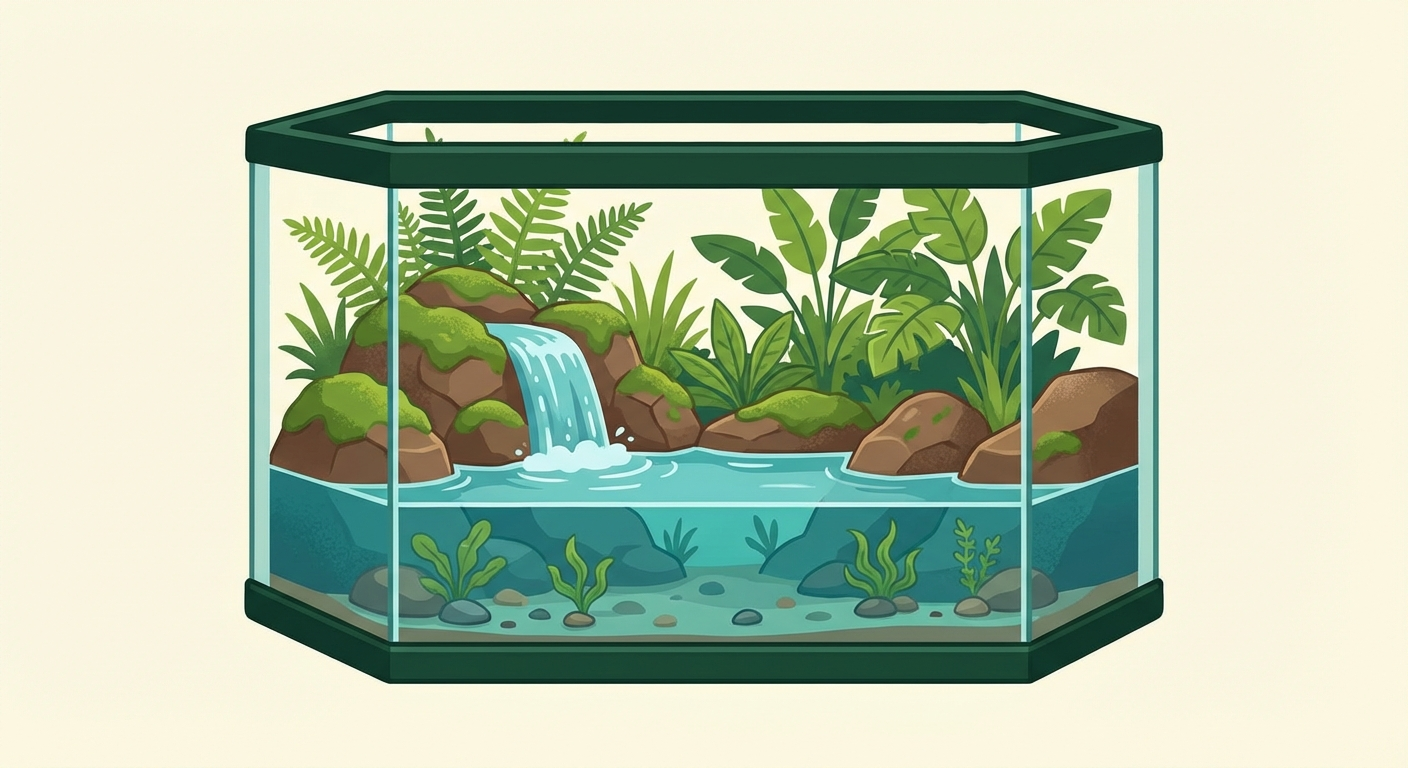
Maintenance Schedule
📅 Daily (3-5 minutes)
- Water Level: Evaporation is high due to water features. Top off with dechlorinated water daily.
- Pump Check: Listen for the hum. Verify the waterfall is flowing smoothly.
- Visual Check: Scan land AND water inhabitants. Are they active?
- Temperature: Land (72-80°F) and Water (68-76°F). Ensure they aren't too far apart.
- Leak Check: Look around the land/water divider for damp spots on the glass.
📅 Weekly (30-45 minutes)
- Water Change: 10-15% water change. Siphon from the bottom to remove detritus.
- Water Testing: Check pH, Ammonia, Nitrite, Nitrate. Aim for 0/0/<20ppm.
- Glass Cleaning: Clean water spots and algae from inside and out.
- Pruning: Trim both terrestrial plants and aquatic plants.
- Transition Zone: Inspect the area where land meets water. Is substrate eroding?
📅 Monthly (1-1.5 hours)
- Deep Water Change: 25-30% change to reset nutrient levels.
- Pump Maintenance: Clean the impeller and tubing. Mineral buildup kills pumps.
- Flow Path: Check if the waterfall is digging a channel. Redirect flow if needed.
- Seal Check: Inspect silicone seals on the divider for any micro-leaks.
- Drainage: Check if the land section's false bottom needs draining.
📅 Seasonal / Quarterly
- Winter: Water evaporates faster with dry heating air. Top off frequently. Water cools—check if you need an aquarium heater.
- Summer: Algae blooms occur with warmth and light. Reduce photoperiod to 8 hours. Increase water changes.
- Filter Media: Replace mechanical filter pads (sponge/cotton) every 3 months.
"Is This Normal?" Troubleshooting
"The water is cloudy/milky"
This is a bacterial bloom. Very common in new setups or after a heavy cleaning. It usually clears on its own in 3-7 days as the bacteria settles.
"There's algae everywhere"
Some algae is a sign of a healthy, lit ecosystem. Brown diatoms are normal in new tanks and disappear.
"My pump stopped working"
It's likely clogged or the impeller is stuck.
"The water smells"
A healthy paludarium should smell like a damp forest or nothing at all.
"My land section is flooding"
The drainage layer below the soil is likely full.
"Substrate is eroding into the water"
Some settling is natural, but heavy erosion muddies the water.
When to Wait vs. When to Act
A quick framework to help you make decisions without panic.
🟢 Wait & Watch
- Cloudy water in the first month of setup (bacterial bloom).
- Brown diatom algae on glass (normal phase).
- Minor algae on hardscape (adds character).
- Plants drooping slightly after pruning/trimming.
🔴 Act Now
- Ammonia or Nitrite levels above 0 (toxic to aquatic life).
- Foul smell coming from the water section.
- Pump failure (no circulation = low oxygen).
- Animals gasping at the water surface (suffocation).
Winter Care
Evaporation accelerates due to dry indoor air. Check water levels daily. If you keep tropical fish, monitor water temp closely; room temp might be too cold, necessitating a submersible heater.
Summer Care
Warm water holds less oxygen. If temps rise above 78-80°F, increase surface agitation with the pump output. Algae thrives in summer—reduce lighting duration to 8 hours to keep it in check.